SSDMA has made notable advancements in communication systems to ensure uninterrupted connectivity during disasters.
| Sl. No | District / Location | Phone No |
|---|---|---|
| 1 | SSDMA-HQ | 8991118855 |
| 2 | Namchi District | 8991118856 |
| 3 | Mangan District | 8991118857 |
| 4 | Pakyong District | 8991115520 |
| 5 | Gangtok District | 8991125527 |
| 6 | Soreng District | 8991125529 |
| 7 | Gyalshing District | 8991125528 |
| 8 | Chungthang SDM (Mangan District) | 8991125530 |

The Emergency Response Support System (ERSS), a flagship national initiative for integrated emergency services, has been extended in Sikkim to incorporate disaster management functionalities. This integration has significantly strengthened the state’s capacity to respond to emergencies in a coordinated and efficient manner.
By integrating ERSS 112 into disaster management operations, Sikkim has significantly streamlined its emergency response mechanism, ensuring timely assistance and improved coordination across agencies.

The State Disaster Management Authority (SSDMA) has collaborated with the Geological Survey of India (GSI) to develop a state-wide Rainfall-Induced Landslide Early Warning System. This initiative aims to predict landslides triggered by heavy rainfall, which is a common occurrence during the monsoon season in the region.
This system acts as a critical tool for minimizing the impact of landslides by enabling timely alerts and strengthening disaster response mechanisms across the state.

To address recurring landslide issues at the SNT site in Mangan town, the district headquarters of North Sikkim, SSDMA has initiated a pilot project for landslide mitigation with support from the National Disaster Management Authority (NDMA).
Further proposals are under consideration to undertake additional stabilization work at the base of the landslide, ensuring a more comprehensive and long-term solution.
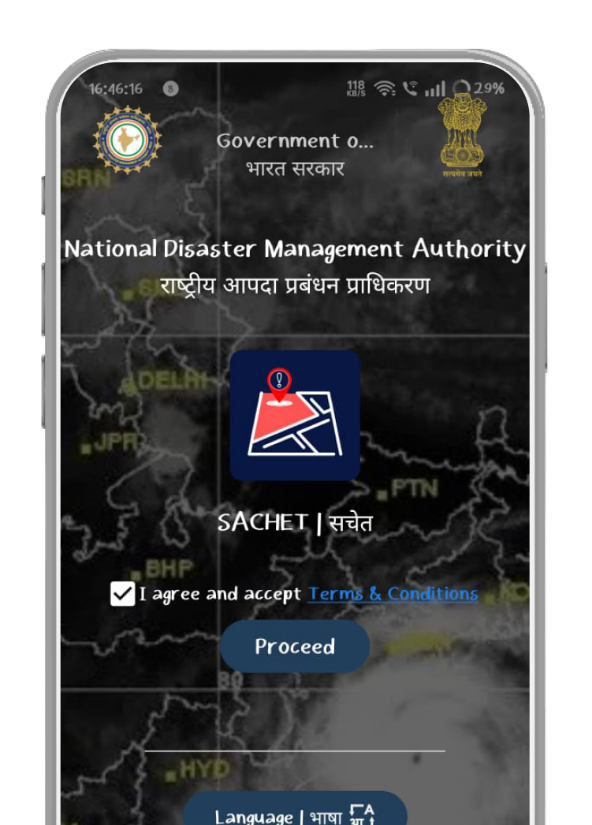

The State Disaster Management Authority (SSDMA) has successfully implemented the Common Alert Protocol (CAP) based “SACHET” system, a state-wide initiative aimed at disseminating SMS-based alerts and warnings to the public. This system plays a vital role in ensuring timely and effective communication of potential disaster threats.
The SACHET mobile application is available on both Android and iOS platforms. Citizens are encouraged to download and install the application to receive real-time alerts, warnings, and important disaster-related information.

In collaboration with the Swiss Development Cooperation (SDC) and the National Disaster Management Authority (NDMA), SSDMA has initiated the installation of Automatic Weather Stations (AWS) at critical glacial lakes in North Sikkim. These installations are vital for monitoring climatic and hydrological parameters to predict and mitigate the risk of Glacial Lake Outburst Floods (GLOF).
These initiatives provide critical insights into the environmental dynamics of glacial lakes, enabling proactive disaster management and strengthening resilience against GLOF-related hazards.


In partnership with Amrita Vishwa Vidyapeetham, SSDMA has implemented a real-time Landslide Early Warning System at Chandmari in Gangtok, East Sikkim. This advanced system is designed to predict landslides with significant lead time, enabling efficient evacuation and disaster response.
This system demonstrates the effective use of advanced technology in disaster management, offering a reliable framework for early warnings and preventive action against landslides.

A Mock Exercise is a practical method to simulate real-time emergency situations, enabling stakeholders and communities to understand how to respond effectively during disasters. It provides hands-on experience in evacuation procedures, use of emergency systems, hazard awareness, and adherence to safety protocols.
Such exercises help build a culture of preparedness, test existing plans and Standard Operating Procedures (SOPs), assess the readiness of departments, identify gaps, and improve coordination and resource utilization.
Mock exercises are essential for strengthening disaster preparedness, improving coordination, and ensuring effective response during real emergency situations.